FitNourish
Services
Tools
Book Now

Personalised for You

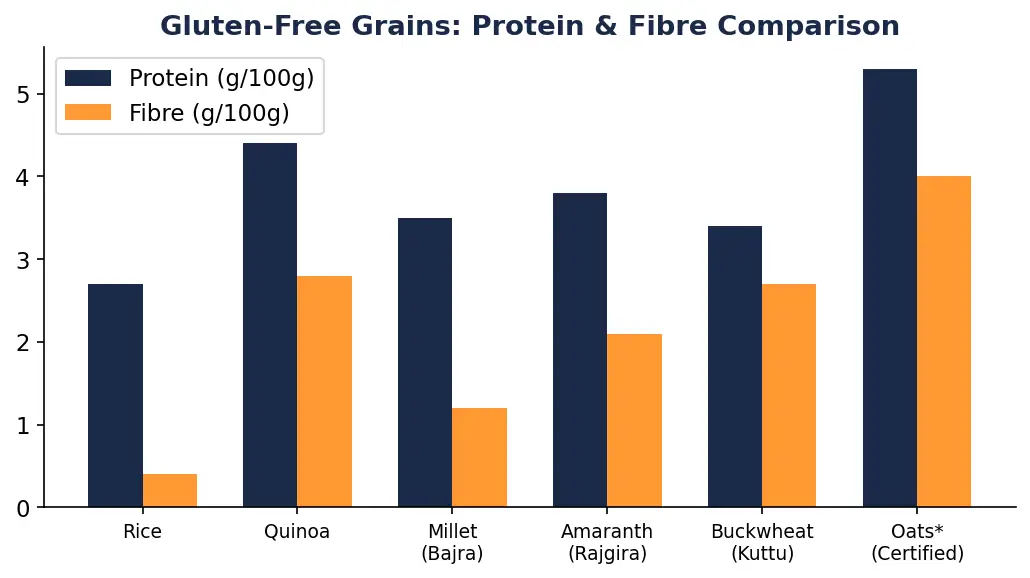
Whether you have celiac disease, gluten sensitivity or simply feel better without wheat, going gluten-free should never mean going nutrition-free. Many people cut gluten but replace it with processed gluten-free junk. Our plan uses naturally gluten-free Indian staples — rice, ragi, jowar, bajra, rajgira and buckwheat — to deliver fibre, B-vitamins and energy without any compromise on taste or variety.

Who This is For

  • People diagnosed with celiac disease (confirmed by biopsy or blood test)
  • Those with non-celiac gluten sensitivity experiencing bloating or fatigue
  • Anyone with IBS who improves on a gluten-free trial
  • People with autoimmune conditions exploring dietary triggers
  • Families wanting to support a gluten-free member without separate cooking
  • Health-conscious individuals choosing gluten-free for digestive comfort
Gluten-Free Diet Plan
Our Approach

How We Help You

Diagnosis Confirmation

We review your celiac panel, tTG-IgA and biopsy results to determine if strict lifelong avoidance or moderate reduction is appropriate.

Indian Millet Integration

Ragi dosa, jowar roti, bajra khichdi, rajgira paratha — we build your plan around naturally gluten-free Indian grains you already know.

Hidden Gluten Identification

Soy sauce, oats (unless certified), atta blends, communion wafers, medications — we audit every hidden source.

Nutrient Gap Prevention

Gluten-free diets often lack fibre, iron and B-vitamins. We proactively fill these gaps through food choices and fortified options.

Kitchen Cross-Contamination Guide

Separate cutting boards, toasters and storage for strict celiac households. Practical tips for shared kitchens.

Symptom & Antibody Tracking

We monitor digestive symptoms monthly and recommend annual tTG-IgA retesting to confirm gut healing.

Food Guide

What to Eat and What to Limit

Eat Plenty Of

  • Indian millets: ragi, jowar, bajra, amaranth (rajgira), foxtail millet
  • Rice varieties: basmati, brown rice, red rice, poha, rice flour
  • Pseudo-cereals: quinoa, buckwheat (kuttu), water chestnut flour (singhara)
  • All dal, legumes, fruits, vegetables, nuts and seeds (naturally GF)
  • Dairy, eggs, meat, fish — all naturally gluten-free
  • Certified gluten-free oats (if tolerated)

Limit or Avoid

  • Wheat in all forms: atta, maida, suji, daliya, seitan
  • Barley and rye (found in beer, malt, some cereals)
  • Regular soy sauce (contains wheat) — use tamari instead
  • Processed foods without clear gluten-free labelling
  • Oats unless certified gluten-free (cross-contamination risk)
  • Bakery items, biscuits and bread unless specifically gluten-free
90%
Symptom relief within 4 weeks
100%
Nutritionally complete plans
85%
Report better digestion and energy
4.8/5
Client satisfaction score
FAQs

Questions Our Clients Ask

Not exactly. Gluten is found in wheat, barley, rye and their derivatives. A wheat-free diet avoids only wheat but may include barley malt or rye. Celiac patients must avoid all gluten sources, not just wheat.

Not automatically. Many gluten-free packaged foods are higher in sugar and fat than their wheat counterparts. Weight management still requires calorie awareness — which our plan provides.

Yes, with precautions. We provide a restaurant card explaining your needs, a list of safe cuisines (South Indian, Japanese rice-based) and questions to ask before ordering.

Yes. All true millets — ragi, jowar, bajra, foxtail, kodo, barnyard — are naturally gluten-free. They are excellent wheat replacements with superior mineral content.

We create a weekly tiffin plan with kid-friendly gluten-free options: ragi dosa rolls, rice pulao, rajgira chikki, poha cutlets and fruit — all safe, tasty and easy to pack.

Ready to start a plan that actually fits your life?

Speak to a registered dietitian in your time zone, in your language.

Book Your Free Consultation
WhatsApp Book
Free 20-Min Consultation