FitNourish
Services
Tools
Book Now

Personalised for You

Elite performance demands elite fuel. Whether you play cricket, run marathons, box or swim, your body needs precisely timed nutrients to perform, recover and adapt. Our sports nutrition plans are periodised around your training calendar — loading before competition, recovering after intense sessions and maintaining during off-season. Every meal has a purpose.

Who This is For

  • Competitive athletes in cricket, football, badminton or athletics
  • Marathon runners and endurance cyclists
  • Combat sport athletes (boxing, MMA, wrestling) managing weight cuts
  • Swimmers and gymnasts needing lean power-to-weight ratios
  • Weekend warriors and recreational sportspeople wanting an edge
  • Young athletes (under 18) needing growth-supportive sports nutrition
Sports Person Diet Plan
Our Approach

How We Help You

Sport-Specific Macros

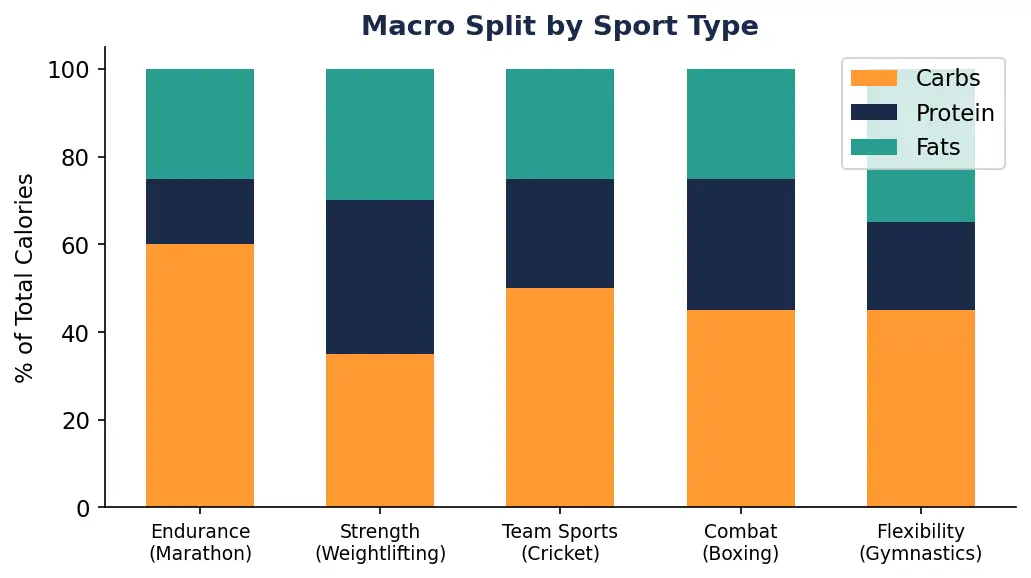
Endurance athletes get 55-65% carbs; strength athletes get 30-35% protein. We match macros to your exact sport demands.

Periodised Fuelling

Pre-season building, in-season maintenance, taper-week loading and off-season recovery — each phase has its own nutrition protocol.

Hydration & Electrolyte Strategy

Sweat-rate testing guides personalised fluid plans. We prevent cramping, heat exhaustion and performance drops from dehydration.

Injury Prevention Nutrition

Collagen, vitamin C, omega-3 and adequate protein to strengthen tendons, reduce inflammation and speed healing.

Competition-Day Fuelling

Exact meal timing and composition for match day — from the night before to post-event recovery within 30 minutes.

Performance Metrics Tracking

We correlate nutrition changes with training output, recovery heart rate and body composition to prove what works.

Food Guide

What to Eat and What to Limit

Eat Plenty Of

  • Carb-loading staples: rice, pasta, sweet potato, banana, oats
  • High-quality protein: chicken, eggs, fish, paneer, whey isolate
  • Recovery foods: tart cherry juice, beetroot, turmeric milk, honey
  • Electrolyte sources: coconut water, banana, salted lassi, ORS
  • Anti-inflammatory: fatty fish, walnuts, olive oil, ginger
  • Quick-digesting pre-event: white rice, toast with jam, energy gels

Limit or Avoid

  • High-fibre or heavy meals within 2 hours of competition
  • Alcohol during training blocks — impairs recovery for 48+ hours
  • Untested new foods on competition day
  • Excess caffeine that disrupts sleep and recovery
  • Crash diets for weight cuts — causes muscle loss and weakness
  • Sugary sports drinks when plain water suffices (low-intensity sessions)
12-18%
Average performance improvement
40%
Faster post-training recovery
85%
Fewer muscle cramps reported
4.9/5
Athlete satisfaction score
FAQs

Questions Our Clients Ask

Sports nutrition is periodised around competition calendars, includes sport-specific fuelling strategies (carb-loading, match-day protocols) and accounts for training volume that far exceeds typical gym sessions.

No. Whole food covers 90% of athletic needs. We may recommend creatine, caffeine or beta-alanine for specific sports where evidence is strong — but food always comes first.

We use gradual, planned weight cuts over 4 to 8 weeks — never crash dehydration. This preserves strength, reaction time and mental sharpness on competition day.

Absolutely. With strategic combinations of plant proteins, iron-rich foods and B12 supplementation, vegetarian athletes can match their non-vegetarian counterparts in every metric.

A carb-rich, moderate-protein, low-fat dinner 10 to 12 hours before competition. Think: rice with dal and vegetables, or pasta with light sauce. Avoid anything new, spicy or high in fibre.

Ready to start a plan that actually fits your life?

Speak to a registered dietitian in your time zone, in your language.

Book Your Free Consultation
WhatsApp Book
Free 20-Min Consultation